Oct 11, 2026Low MOQ Guides
Low MOQ Custom Activewear Manufacturing: A Guide for Small Brands
Learn how small brands plan custom activewear with MOQ by style and color. Review fabrics, samples, branding, quality control and reorders with Duorui.
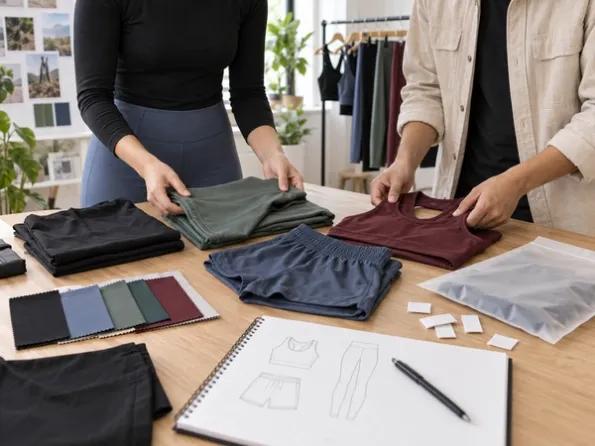
Low minimum order quantities can make custom activewear manufacturing more accessible to emerging brands. Instead of committing most of your budget to one large production run, a small-batch approach lets you test designs, colors, fit, and customer demand with less inventory pressure.
MOQ for Your Custom Activewear Project
Custom production starts from 100 pieces per style and color. Final MOQ depends on fabric, color, design and customization. Some styles require 150 pieces per style and color. Sizes can be mixed within the confirmed quantity. Confirm MOQ for each selected style before planning your order.
However, low MOQ does not mean that every product, color, and customization can be produced without limits. This guide explains how small brands can work with a low MOQ activewear manufacturer and move from an idea to a collection.
What Does Low MOQ Mean in Activewear Manufacturing?
MOQ means minimum order quantity. It is the smallest quantity a manufacturer accepts for a configuration. In custom sportswear, MOQ is usually calculated by style and color because each combination requires separate fabric preparation, cutting, trims, sewing, quality control, and packing.
Duorui’s starting MOQ is 100 pieces per style and color. For example, ordering one leggings design in black and navy normally means 100 black pieces and 100 navy pieces. Sizes can usually be mixed within each color based on an agreed size ratio.
A low MOQ gives brands flexibility, but the unit price is normally higher than for a much larger run. Setup work is spread across fewer garments, and small quantities may create higher fabric, dyeing, logo, and packaging costs. The right question is not simply how low the MOQ can go. It is whether the order size gives your brand enough room to test the market while keeping the product commercially viable.
Why Small Brands Benefit from Small-Batch Production
Inventory is cash that has not yet returned to the business. Large first orders can lock money into slow-moving sizes, colors, or designs. Small-batch activewear production reduces that exposure and gives a brand faster feedback from real customers.
A smaller first run can help you identify the best-selling sizes, compare color demand, review fit comments, and test whether the retail price works.
Low MOQ is especially useful for startup brands, boutique retailers, gyms, yoga studios, fitness creators, and established labels testing a new category.
Start with Fewer Styles and Stronger Product Decisions
The easiest way to waste the advantage of a low MOQ is to launch too many styles at once. Five styles in four colors can quickly become twenty separate production combinations. Even when each MOQ is manageable, the total order and development workload can become expensive.
A focused capsule collection is often stronger. For example, begin with one pair of leggings, one sports bra, and one pair of gym shorts in two coordinated colors.
Choose designs that share fabric or color when possible. Consolidating materials can improve consistency and make small-batch manufacturing more efficient.
Understand What Affects the Unit Price
Small-order pricing depends on more than quantity. Fabric type, fabric weight, garment construction, seam details, custom colors, printing, labels, packaging, and testing all affect cost.
A simple solid-color legging with a heat-transfer logo will usually be easier to produce than a multi-panel design with contrast stitching, custom-dyed mesh, several trims, and individual specialty packaging.
Ask for a quotation based on a clear specification. If your target price is not realistic, adjust the product strategically instead of removing the features customers value most. Simplifying a hidden seam or packaging component may be smarter than choosing a fabric that performs poorly.
Plan Fabrics Before Confirming the Collection
Fabric availability is a major factor in low MOQ production.
If your brand needs an exact custom color, the fabric mill may require a higher dyeing quantity than the garment factory’s sewing MOQ.
Performance should come before appearance. Evaluate four-way stretch, recovery, GSM, opacity, moisture management, surface finish, and wash performance. Our guide on choosing the right fabric for custom activewear explains how nylon, polyester, elastane, and fabric construction affect leggings, sports bras, yoga sets, and gym wear.
Keep Branding Effective and Production-Friendly
Custom branding helps a small collection look professional, but each method has different setup requirements.
Test the exact logo on the chosen fabric. Stretch materials can affect adhesion, sharpness, and appearance after washing. The sample should confirm placement, size, color, and technique before bulk production.
For the first order, use branding elements that can continue across future styles. A versatile main label, care label, hangtag, and packaging format reduce unnecessary setup work and make reorders easier.
Use Sampling to Reduce Expensive Mistakes
Sampling is not a formality. It is the stage where the brand checks measurements, fit, fabric, construction, logo, color, and overall appearance before committing to bulk production.
Provide a tech pack, measurement chart, reference garment, or clear annotated images. The more precise the information, the fewer revisions are usually needed.
Send one organized list of comments after each review. Repeated small changes sent at different times can create confusion and delay. Our step-by-step guide to starting a custom activewear line explains the complete workflow from product planning and sampling to quality control and bulk production.
Confirm Production Details in Writing
Before paying for bulk production, confirm the final style, colors, quantities, size ratio, fabric, logo, labels, packaging, price, sample approval, payment terms, and estimated timeline. Written confirmation protects both sides and reduces assumptions.
The production lead time should begin from an agreed point, such as deposit payment and approval of the final sample, fabric, and trims. Custom-dyed materials or special accessories can extend the schedule, so disclose launch deadlines early.
Brands should also plan time for inspection, shipping, customs, photography, and receiving. A reliable launch calendar includes more than the sewing period.
Build Quality Control into the Order
Low MOQ should not mean low quality standards. Bulk production should be checked against the approved sample and confirmed specifications. Important points include measurements, stitching, seam strength, color consistency, logo placement, workmanship, labeling, packing, and quantity.
Performance garments may also require checks for stretch recovery, opacity, pilling, colorfastness, shrinkage, and wash durability.
Ask how quality issues are recorded and handled before shipment. Clear standards are more useful than vague promises that everything will be perfect.
Plan Reorders Before the First Collection Sells Out
A low-MOQ launch works best when it creates reliable information for the next order.
If one product performs well, reorder before every size sells out. Confirm whether the same fabric and color will remain available and whether the lead time changes during busy seasons. Stable core products can later support larger quantities and better purchasing efficiency.
European activewear trends increasingly favor focused product stories, flexible sourcing, and faster replenishment. Read our overview of activewear market trends to understand why smaller, data-led collections can be valuable.
Choose a Manufacturing Partner for Long-Term Growth
The right custom activewear manufacturer should help you make realistic decisions, not simply agree with every request. Useful support includes fabric recommendations, pattern development, sampling, logo testing, quality control, packaging, and clear production communication.
Ask about experience with your product category, sample process, MOQ calculation, customization limits, certifications, and typical lead times.
Duorui supports small and growing activewear brands with OEM and ODM development, flexible customization, fabric sourcing, sampling, private labels, packaging, and bulk production. The starting MOQ is 100 pieces per style and color. Browse our custom activewear products, learn about Duorui’s manufacturing capabilities, or contact us to discuss your next small-batch leggings, sports bra, yoga wear, gym wear, or coordinated activewear collection.
Get a Low MOQ Project Estimate
Send your selected styles, colors, size range, quantity per style and target launch date. Attach reference images or a tech pack to review sample requirements and the final production MOQ.