Sep 21, 2026Buying Guides
5 Activewear Trends Shaping the European Market in 2026
Discover 5 key trends shaping the European activewear market in 2026, from functional fitness and tennis lifestyle to 150-piece-MOQ sourcing and faster product replenishment.
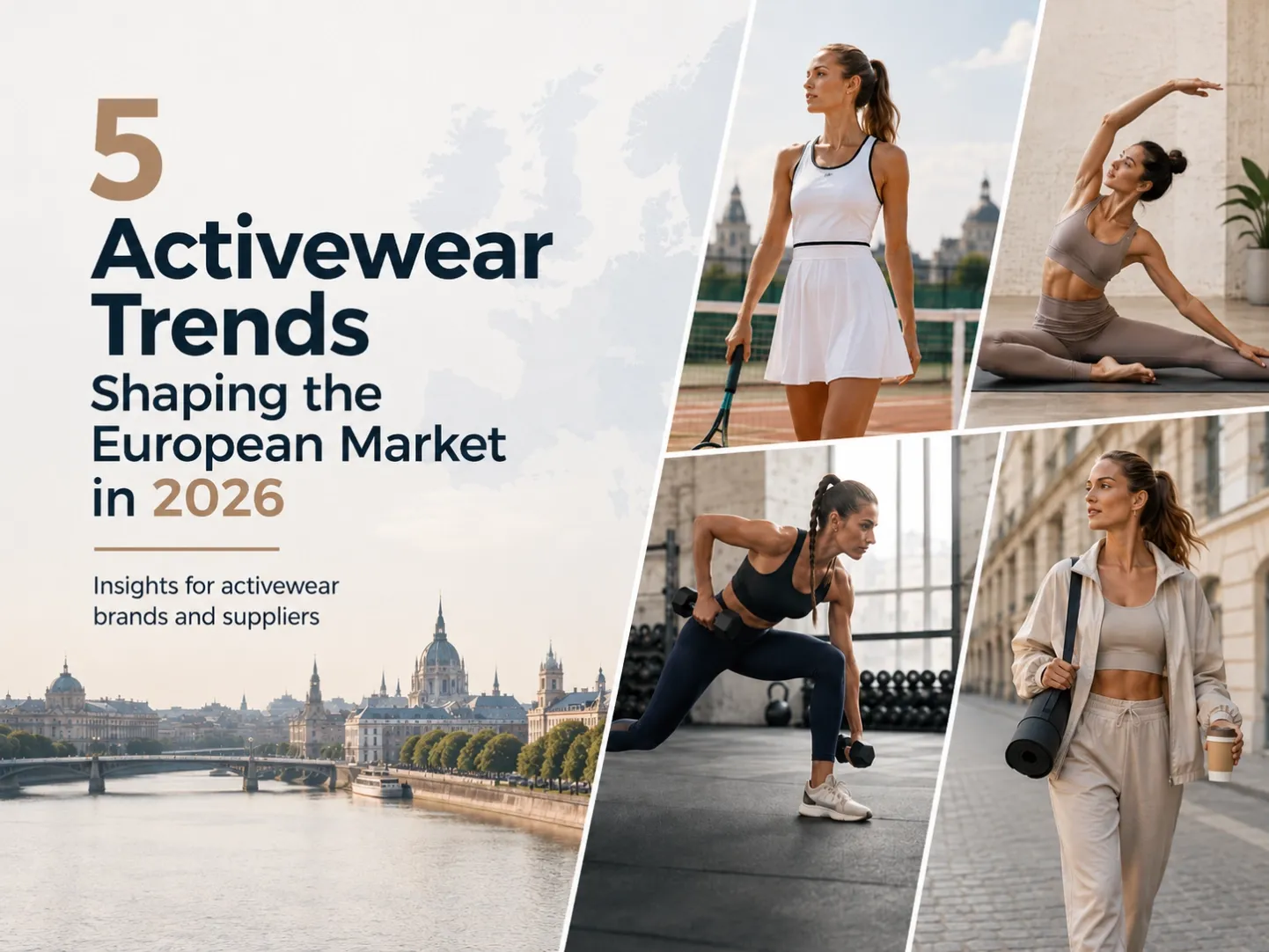
The European activewear market continues to evolve in 2026. While consumers are becoming more selective, demand for sportswear has not disappeared. Instead, the market is becoming more fragmented, more lifestyle-driven and increasingly focused on specific sports communities.
For activewear brands, especially emerging and independent labels, this creates new opportunities — but it also means product selection, inventory control and supply chain flexibility are becoming more important than ever.
Here are five trends we believe activewear brands should watch in the European market.
1. Functional Fitness Is Creating New Activewear Niches
Running, yoga and traditional gym training are no longer the only major categories shaping sportswear demand.
Functional and hybrid fitness competitions are building increasingly strong communities across Europe. Events such as XENOM London bring together strength, endurance and technical fitness in a competitive environment, attracting both serious athletes and recreational participants.
This creates opportunities for products designed specifically for high-intensity training, including:
- High-support sports bras
- Durable training leggings
- Performance shorts
- Oversized training T-shirts
- Lightweight jackets
- Pre- and post-training apparel
For emerging brands, targeting a specific fitness community can also make customer acquisition easier than competing in the much broader general activewear market.
Instead of simply creating another fitness collection, brands can build products around a clearly defined customer and training environment.
2. Tennis, Golf and Active Lifestyle Are Moving Closer Together
Another clear trend in European activewear is the continued crossover between performance clothing and everyday fashion.
Tennis dresses, pleated skirts, polo tops, lightweight jackets and relaxed sportswear are increasingly designed to work both inside and outside the sports environment.
Consumers are no longer purchasing every activewear item purely for exercise.
They may wear the same outfit for:
- Tennis or Pilates
- Travelling
- Coffee and casual meetings
- Weekend activities
- Social media content
- Everyday city wear
This is why categories such as tennis lifestyle, studio-to-street and women’s golf apparel continue to attract attention.
For brands, products with multiple wearing occasions can offer stronger commercial potential because consumers have more reasons to buy and wear them.
3. Europe Still Offers Growth Opportunities for Sportswear Brands
Despite pressure on consumer spending in some markets, Europe should not be treated as one single weak market.
Recent performance from major sportswear companies shows significant differences between regions. Under Armour, for example, reported double-digit revenue growth in its EMEA business while its North American business declined during the same period.
This highlights an important point for smaller activewear brands and suppliers:
Market demand is becoming more selective rather than disappearing.
Some brands, sports categories and distribution channels continue to grow even when the broader retail environment becomes more difficult.
For activewear businesses, this makes market positioning increasingly important.
Instead of targeting everyone interested in sportswear, brands may achieve better results by focusing on specific segments such as:
- Pilates
- Tennis
- Functional fitness
- Running communities
- Women’s golf
- Studio-to-street
- Travel activewear
A smaller but clearly defined audience can often be more valuable than a large, poorly defined one.
4. Brands Need Fewer Products — but Better Product Decisions
One of the biggest challenges for independent activewear brands is no longer finding enough styles.
It is choosing the right ones.
Factories and suppliers can easily present hundreds of leggings, sports bras, tops and jackets. However, carrying too many SKUs can increase inventory pressure, development costs and the risk of unsold stock.
For small and growing brands, a more efficient strategy is often to build a focused capsule collection.
For example:
Pilates Collection
- Soft-touch leggings
- Low-impact sports bra
- Fitted long sleeve
- Lightweight zip jacket
Tennis Lifestyle Collection
- Tennis dress
- Pleated skirt
- Polo top
- Lightweight outer layer
This allows brands to create a clearer visual identity while reducing unnecessary inventory.
The future of sourcing is therefore not simply about having more product options.
It is about making better product decisions.
5. Low MOQ and Fast Replenishment Are Becoming More Valuable
Inventory risk remains one of the biggest problems for small and mid-sized activewear brands.
Ordering too much of an untested style can lock up cash for months. Ordering too little from an inflexible supplier can result in missed sales when a product performs well.
This is why flexible production is becoming increasingly valuable.
Instead of launching a large quantity immediately, brands can:
- Start with a smaller initial order.
- Test customer demand.
- Identify the strongest-selling styles and colors.
- Replenish successful products quickly.
- Reduce investment in slow-moving inventory.
This approach turns low-MOQ sourcing into more than a production advantage.
It becomes an inventory risk management strategy.
For emerging European activewear brands, the ability to test products in smaller quantities and reorder quickly can sometimes be more valuable than achieving the absolute lowest unit price.
What These Trends Mean for Activewear Brands
The European sportswear market is becoming more specialized.
Consumers increasingly expect products that combine performance, comfort, design and everyday usability. At the same time, independent brands need to manage inventory more carefully and respond to trends more quickly.
For suppliers, this also changes what customers need.
A good activewear manufacturing partner is no longer expected to simply produce garments.
Brands increasingly need support with:
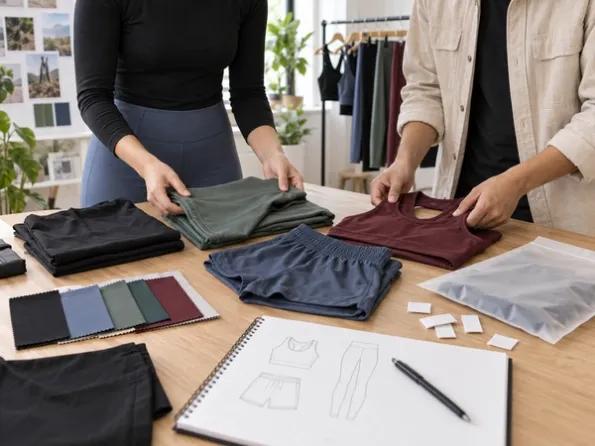
- Product development
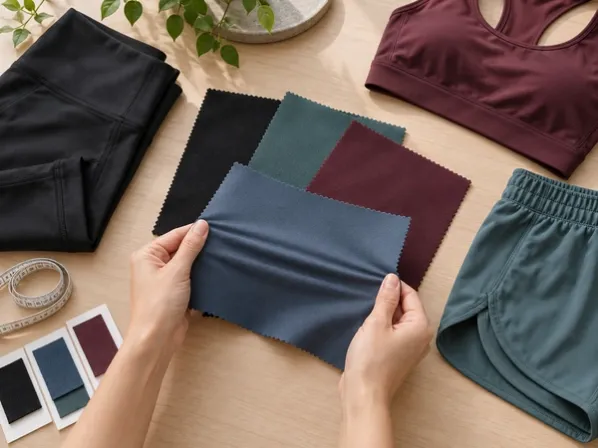
- Fabric selection
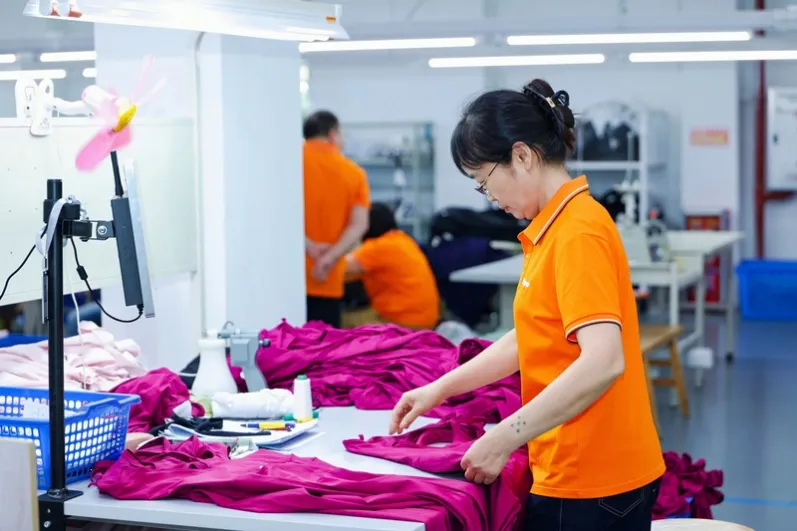
- Small-batch production
- Custom colors and logos
- Packaging
- Product data
- Quality control
- Fast repeat orders
The brands and suppliers that respond fastest to these changes will be in a stronger position as the European activewear market continues to evolve.
Build Your Next Activewear Collection with Duorui
Duorui Apparel supports emerging and established activewear brands with OEM and ODM development, flexible customization and small-batch production.
From leggings, sports bras and matching sets to tennis dresses, Pilates apparel and lifestyle sportswear, we help brands develop products with lower inventory risk and greater flexibility.
Looking for a reliable activewear manufacturing partner in China? Contact Duorui to discuss your next collection.
EXPLORE RELATED CUSTOM ACTIVEWEAR
Turn these trends into a focused capsule collection. Explore selected private-label styles and develop fabrics, colors, logos, labels and packaging with Duorui. MOQ starts from 150 pieces per style and color.