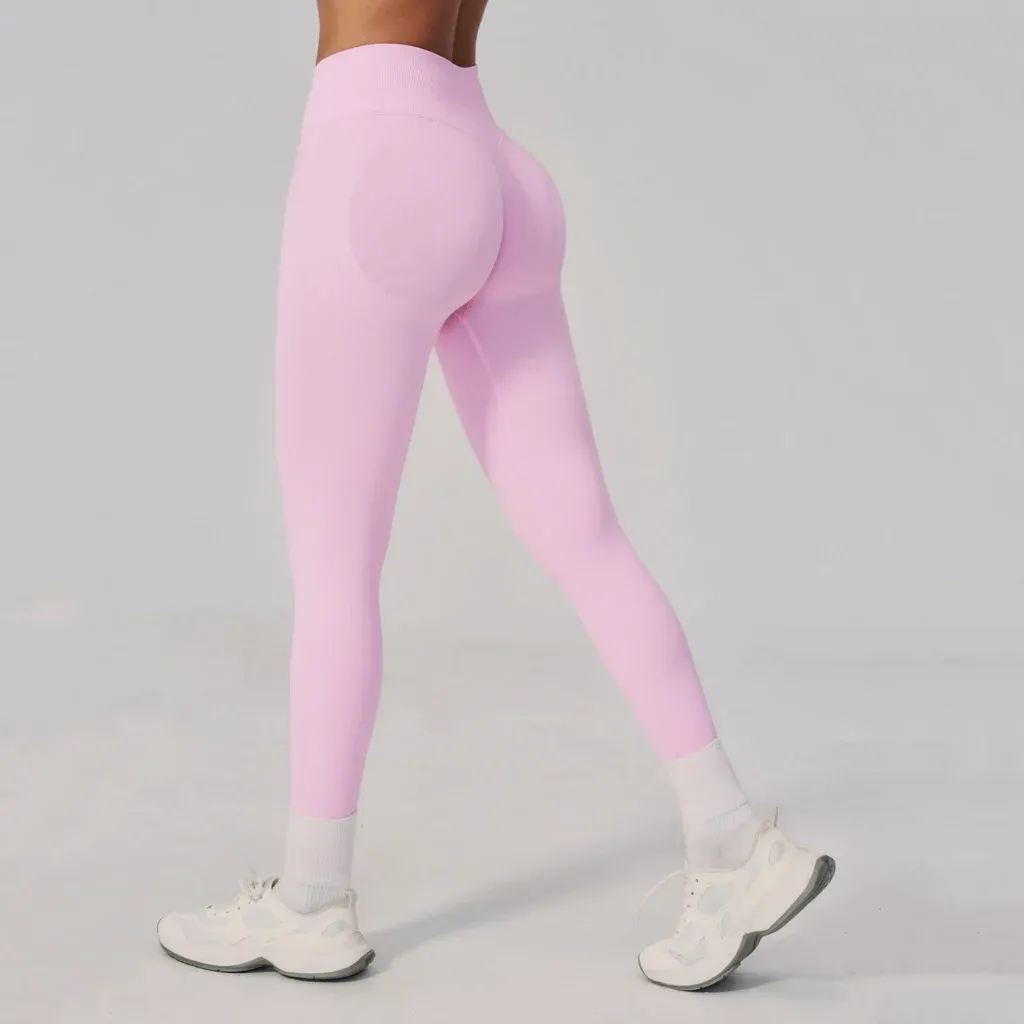
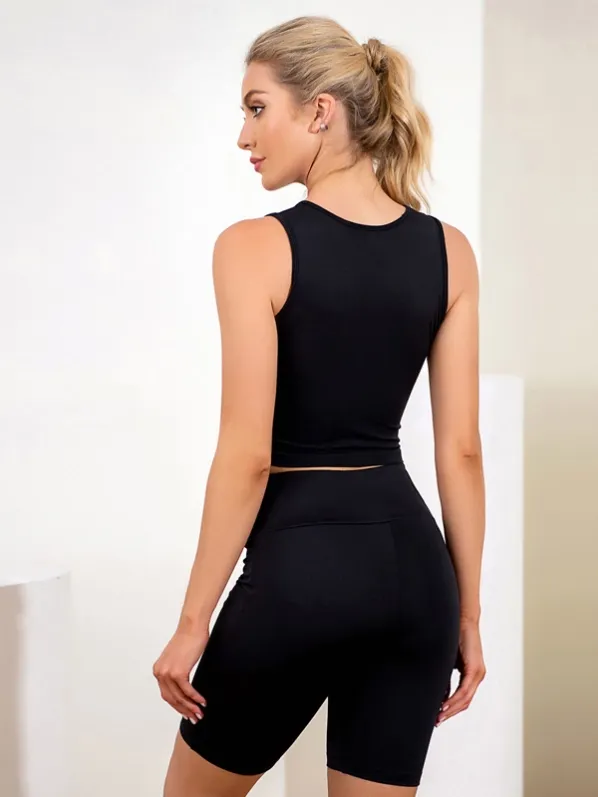
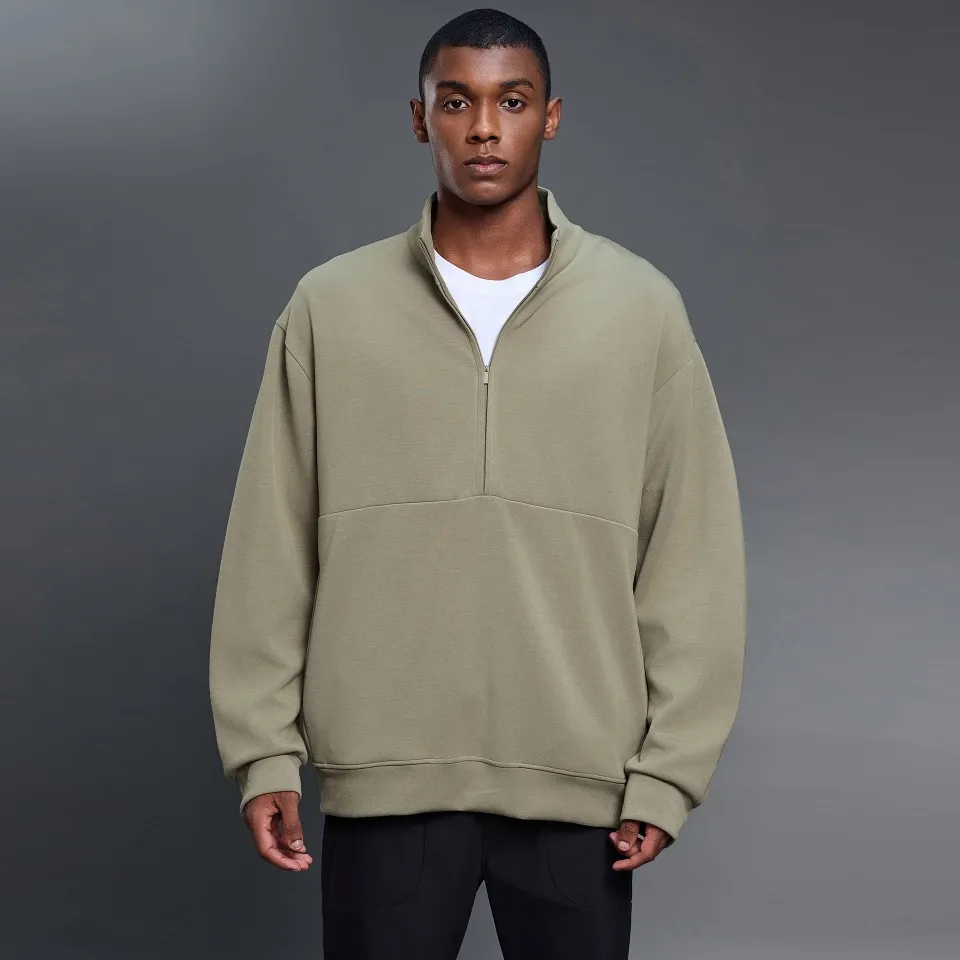
At 100 pieces per style per colour, you can order a fully custom activewear style: your own cut and pattern, your choice of fabric and colour, your logo, and your labels and tags. That is the minimum for one style in one colour, and sizes can be mixed inside the 100 pieces, so four sizes does not mean 400 pieces. This article fits a new brand that already has a design direction and wants to know exactly what a 100-piece order changes, and what still needs a bigger order or a different route. It does not fit a brand that wants one piece in ten colours, or a brand that wants a fabric developed from nothing, because those are different jobs with different minimums, and pretending otherwise is how a small first order turns into a surprise.
What 100 pieces actually buys you
You have a design in your head, or on paper, or in a sample you bought somewhere else, and you want it made your way. The first question a factory asks is how many pieces you need, and the answer shapes everything that follows. At Duorui, a fully custom style starts at 100 to 150 pieces per style per colour. That number is not a sales target. It is the point where cutting your own pattern, setting up your own colour, and applying your own logo stops being a favour and starts being a production run the factory can plan. Below that number, the setup work costs almost as much as the garments, and no honest factory will pretend otherwise. At 100 pieces, the factory cuts one pattern for your style, dyes or buys fabric in your colour, sews your pieces in the sizes you choose, and finishes them with your logo and your labels. You are buying a garment that only exists because you ordered it. The cut is what your customers feel first when they try your leggings on next to three other brands, and the cut is the first thing a 100-piece order lets you own. The second thing it buys you is control over the sizes: you choose how many pieces go in each size, as long as the total reaches 100 pieces for that style in that colour. One hundred pieces is the smallest run that still behaves like a real order, and that is the whole point of it.
What you can change at 100 pieces
The cut comes first. A fully custom order means the pattern is made for your style, so the rise of a legging, the length of a top, the width of a waistband, and the shape of a sleeve can all be set to your measurements. You bring the design, a tech pack, or a reference sample, and the factory builds the pattern from it. If you only have a sketch and a few measurements, say so before sampling, because a pattern built on a guess has to be remade, and a remake costs a second sample round. You can choose from the factory's existing performance fabrics, including the standard 78 percent nylon and 22 percent spandex blend that most of our yoga and training styles are made from, and you can order it in your own colour rather than taking whatever colour is already on the shelf. A custom colour at 100 pieces is a real option, because the dyeing or fabric order is sized to your run. What you cannot do at this quantity is ask the factory to develop a brand-new fabric from nothing, with a new fibre mix and a new finish, because that is a mill job, not a garment job, and it needs a far bigger commitment before anyone will run it. Your logo is the third thing you can change. A silicone logo, a flat print, or embroidery can be applied in your size and in your position, and if the logo needs a silicone mould, that mould costs 35 to 40 US dollars once for that logo. The mould is a one-time cost, not a per-piece cost, so it does not grow when your order grows. Confirm the logo size and position in writing before the sample is cut, because a logo that moves after sampling means the sample must be remade. The fourth thing is the finishing: your woven labels, your wash labels, your hangtags, and your packaging. These are the small pieces that make a garment feel like a brand rather than a blank, and they can be customized as part of a full custom order. Tell the factory exactly which label and tag items you need when you send your design, so they are priced and made with the order instead of added as an afterthought. All four of these changes, the cut, the fabric and colour, the logo, and the labels, are included in what a 100-piece order means.
What 100 pieces does not cover
The most common misunderstanding about a 100-piece minimum is what the 100 pieces are counted on. The minimum is 100 to 150 pieces per style per colour, which means each style and each colour has its own minimum. A legging in black needs 100 pieces, and the same legging in navy needs another 100 pieces, so two colours means 200 pieces, not 100 pieces split across two colours. Three styles in one colour means 300 pieces, not 100 pieces split across three styles. A brand that plans three styles in three colours is planning nine minimums, and the honest way to plan is to count each style-and-colour combination on its own. A sample for one style in one colour costs 50 US dollars per piece, and it is charged separately from the bulk order. If your logo needs a silicone mould, the 35 to 40 US dollar mould fee is also separate, and it is charged once. Sampling takes 10 to 15 days after your design and logo are confirmed, and bulk production takes 25 to 35 days after you approve the sample. Those two periods do not overlap, and the bulk clock does not start until you say the sample is right. The third thing the minimum does not cover is changes after approval. Once you approve the sample, the factory orders fabric and cuts for the full run, so a change to the cut, the colour, or the logo after that point is a new job, with new time and new cost. That is not a penalty. It is the nature of a production run, and the way to avoid it is to decide the design, the fabric and colour, and the logo before the sample is cut, not after it arrives.
Ready stock with your logo, or fully custom at 100 pieces
Not every brand needs a fully custom style for its first order, and the honest comparison is between two real options. The first option is ready stock with your logo. You pick a style that already exists, we add your logo, and the minimum is 20 pieces per style per colour, with sizes mixed inside that quantity. There is no pattern to build and no sample round to wait for in the same way, so this route moves faster, and it suits a brand that wants to test its logo and its market before committing to its own cut. The second option is the fully custom order described in this article, starting at 100 to 150 pieces per style per colour, with a sample at 50 US dollars per piece, a one-time silicone mould at 35 to 40 US dollars if your logo needs one, sampling in 10 to 15 days, and bulk in 25 to 35 days after approval. The custom route costs more up front and takes longer, and in return you own the cut, the colour, and the finishing. The way to choose is to ask one question: does your customer need your cut, or does your customer only need your logo? If your design is the reason someone buys, take the custom route, because a stock cut will not carry a design-led brand. If your logo and your story are the reason someone buys, and the stock cut already fits the way you want, take the ready-stock route for the first order and move to custom when you know which style sells. A brand that orders ready stock and then asks for a different rise, a different waistband, and a different fabric has ordered the wrong product, and a brand that orders fully custom for a style it has never tested has paid for a pattern it may not need. Start with the question, not with the quantity, and the quantity will follow.
What can still go wrong at 100 pieces
A small order does not remove risk, it only makes the risk cheaper to find, and the three problems that appear most often at 100 pieces are all worth naming before you order. The first is fabric availability. A fabric that was available for one sample may need to be reordered for 100 to 150 pieces, and if your colour is not in stock, that reorder can add days to the bulk schedule. Ask, before you pay for the sample, whether the fabric and colour you want are available in the quantity your order needs, and get the answer in writing with your sample date and your bulk date. The second is a size problem across the full run. A sample is usually made in one size, and a size S sample can fit well while size XL pulls at the same seam, so check the sample against the full size range you plan to order, not only against the sample size. The third is a logo problem at scale. A silicone logo that looks clean on one sample can need a mould adjustment when it is applied to 100 pieces, and that adjustment is part of why the mould fee is charged once and why the logo is confirmed before bulk. None of these problems means the factory failed, and none of them is a reason to avoid a 100-piece order. They mean that a small order still needs the same checks as a big order, and that the checks are cheapest when they happen before approval.
Your next step: send three things and get your dates in writing
First, send us your design, your fabric and colour choice, and your logo file with its size and position, and tell us the date you need the bulk goods to leave the factory. A tech pack is the fastest form for the design, but a clear sketch with measurements and a reference photo will do for a first conversation, as long as every measurement you care about is written down. Second, we will confirm the sample cost and time for your style, including whether a 35 to 40 US dollar logo mould is needed, and we will give you a sample date and a bulk date in writing before you pay for the sample. Payment is a 30 percent deposit by bank transfer or PayPal, and shipping is quoted for each order, because the cost depends on the weight, the quantity, and where the goods are going, so no fixed shipping price is promised here. Third, approve the sample only when you have tried it, checked the fit in movement, and confirmed the logo and the colour, and then we start bulk production the same week. If you send your design today, the sample clock starts when the design and logo are confirmed, not when the email arrives, so the fastest move is to close the three open points above. To start, send your design and logo through the inquiry form and tell us your target ship date and your quantities per style per colour. We will reply within 1 business day with your sample cost, your sample date, and your bulk date.