Sep 17, 2026Buying Guides
Yoga Leggings and Sports Bra Fabrics: A Private Label Guide
Compare fabric choices for private label yoga leggings and sports bras, including stretch, recovery, weight, opacity, support and branding.
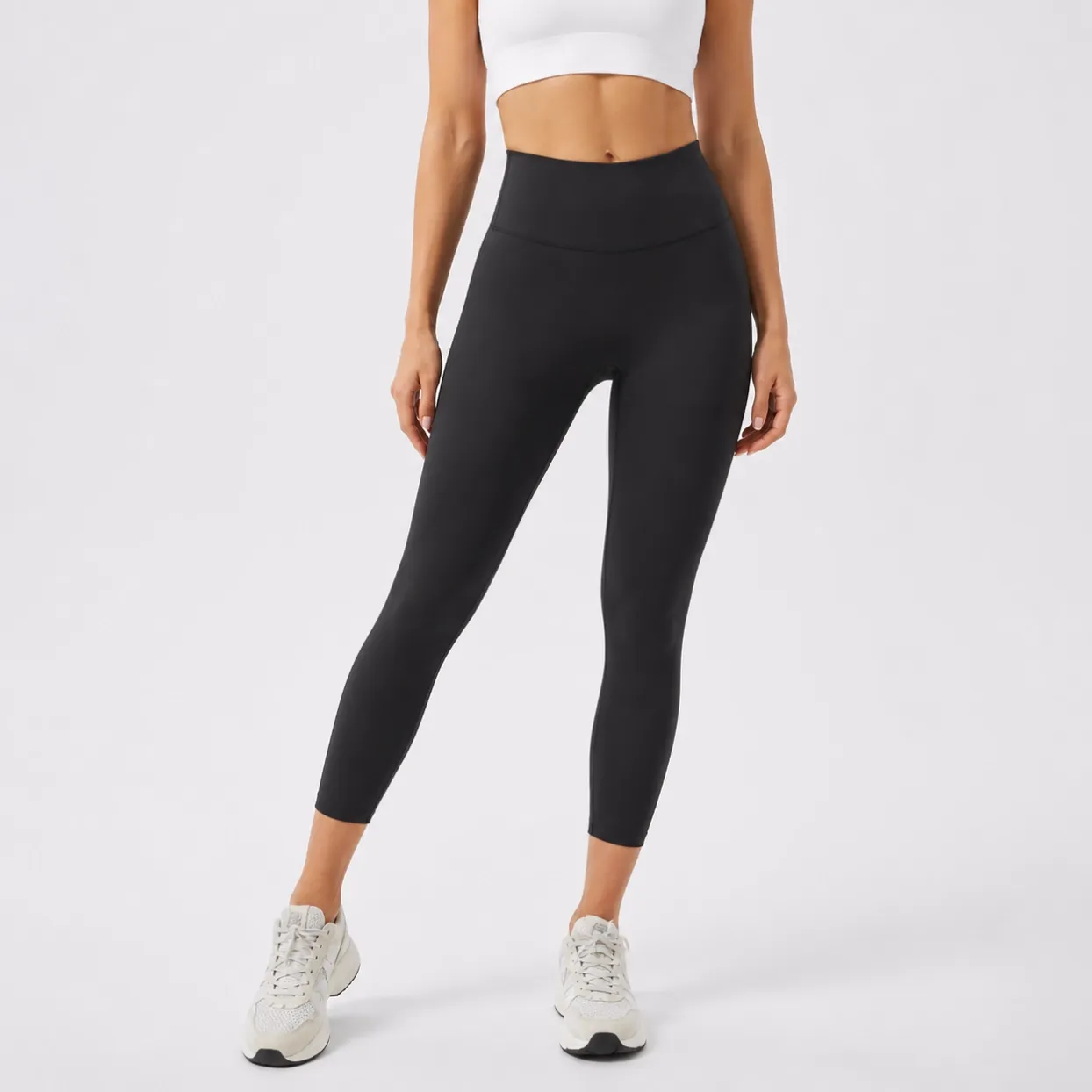
Fabric is one of the most important decisions in a private label yoga or gym collection. Two garments may look similar in a photo, yet perform very differently after stretching, washing and repeated wear. The right fabric must support the product’s purpose, construction, fit and target price rather than simply match a color card.
For small and growing brands, choosing a fabric family carefully can also reduce development complexity. A well-selected base fabric may work across leggings, sports bras, shorts and matching sets, while different weights or constructions can be used where more support or coverage is required.
START WITH THE PRODUCT’S REAL USE
Before comparing compositions, define how the garment will be used. Yoga and Pilates pieces usually prioritize softness, stretch and comfortable movement. Gym and training products may need stronger recovery, support and durability. Athleisure products may place more emphasis on hand feel, appearance and all-day comfort.
A sports bra and a pair of leggings also ask different things from fabric. Leggings need reliable recovery, opacity and shape retention across a large surface area. A sports bra needs enough stability for its intended support level while remaining comfortable around the underband, neckline and straps.
The best fabric is therefore not a universal fabric. It is the fabric that solves the requirements of one specific product.
NYLON-SPANDEX FOR A SMOOTH, SOFT HAND FEEL
Nylon-spandex blends are widely used for premium-feel yoga leggings, sports bras and studio sets. Nylon can create a smooth surface and soft touch, while spandex provides stretch and recovery.
This type of fabric can work well for fitted pieces intended for yoga, Pilates, studio training and athleisure. However, composition alone does not determine performance. Yarn, knitting structure, finishing, weight and dyeing all affect the final result.
When reviewing a nylon-spandex option, check whether it feels too thin for the intended color, whether it becomes shiny under stretch and whether it returns to shape after repeated movement. A soft fabric that loses recovery will not deliver a premium wearing experience.
POLYESTER-SPANDEX FOR TRAINING AND COLOR PERFORMANCE
Polyester-spandex blends are common in gym wear and performance products. They can provide a stable surface, practical moisture management and good color performance, depending on construction and finish.
Polyester options may suit training leggings, gym tops, shorts and sports bras designed for frequent workouts. Some polyester fabrics feel more technical, while others can be brushed or softened for a more comfortable hand feel.
Do not choose polyester only because the garment is described as performance wear. Compare the touch, stretch direction, recovery, breathability and visual appearance against the actual design. The correct decision depends on the customer and product positioning.
FABRIC WEIGHT CHANGES COVERAGE AND SUPPORT
Fabric weight affects drape, opacity, compression and the way a garment sits on the body. A lighter fabric may feel breathable and flexible but can require extra care with pale colors or tight fits. A heavier fabric may provide more coverage and structure but may feel too warm or restrictive for low-impact studio use.
For leggings, evaluate the fabric in a deep bend and squat position, especially in light colors. For sports bras, check how the fabric behaves around cups, seams and the underband. If the design includes double layers, removable pads or gathered details, test the full construction rather than judging a single layer of fabric.
Weight should always be considered together with stretch and recovery. A heavier fabric is not automatically more supportive, and a lighter fabric is not automatically more breathable.
TEST FOUR-WAY STRETCH AND RECOVERY
Four-way stretch allows fabric to move both across and along the garment. This is especially useful for fitted activewear that needs to follow a wide range of motion.
Stretch alone is not enough. Recovery determines whether the fabric returns to its original shape. Poor recovery may cause knees, waistbands or underbands to loosen after wear.
During sampling, stretch the garment repeatedly and wear it through realistic movements. Check the waistband after sitting, bending and exercising. Check sports-bra straps and underbands after pulling and washing. These simple tests reveal more than a composition label.
CHECK OPACITY, COLOR AND SURFACE APPEARANCE
Opacity should be tested in the finished garment because seams, panels and body movement change how fabric stretches. Dark colors may behave differently from white, pastel or bright shades.
Review the fabric under natural and indoor light. Check whether the surface becomes shiny, whether printed or heat-transfer logos remain clean and whether brushed finishes show marks easily.
Color approval should use a physical standard whenever possible. Screens can display the same shade differently, so written color names alone are not reliable for production approval.
MATCH FABRIC TO THE SPORTS BRA SUPPORT LEVEL
Low-, medium- and higher-support sports bras need different construction decisions. Fabric contributes to support, but straps, neckline, underband, cup design, lining and seam placement are equally important.
A soft and highly elastic fabric may suit a low-impact yoga bra. A training bra may need more stable recovery, wider straps or additional layers. The sample should be tested by the type of movement the customer is expected to perform.
Avoid describing support only through marketing language. Define the intended activity and verify the complete garment on the body.
PLAN LOGOS, LABELS AND PACKAGING EARLY
Branding should be tested on the selected fabric rather than decided after sample approval. Heat-transfer logos, silicone logos, embroidery and other techniques interact differently with stretch, texture and garment placement.
Confirm the logo size, color, position and feel during sampling. Labels should also be comfortable against the skin, particularly on fitted yoga and gym products.
Packaging can be developed alongside the garment so the final presentation feels consistent. Duorui supports custom fabrics, colors, logos, labels and packaging for private label activewear projects.
BUILD A COORDINATED FABRIC FAMILY
For a capsule collection, a coordinated fabric strategy often works better than selecting every product independently. Leggings, shorts and some sports bras may share one fabric family, while tops or layers use complementary materials.
This creates a more consistent color and hand-feel story and can make future reorders easier to plan. It also gives product photography and merchandising a more coherent look.
REQUEST SWATCHES AND APPROVE A PHYSICAL SAMPLE
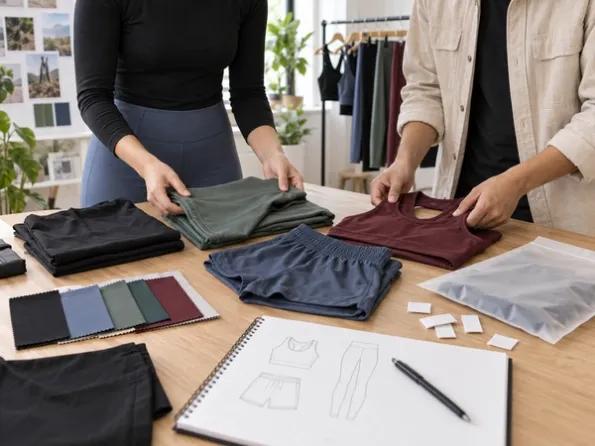
A useful fabric brief should include the product type, target activity, preferred hand feel, coverage requirement, support level, color direction and target customer. Buyers can send a design, tech pack or reference images to begin development.
Review swatches first, then evaluate the complete garment sample. The final decision should be based on how the fabric performs in the real construction, not only how it feels in the hand.
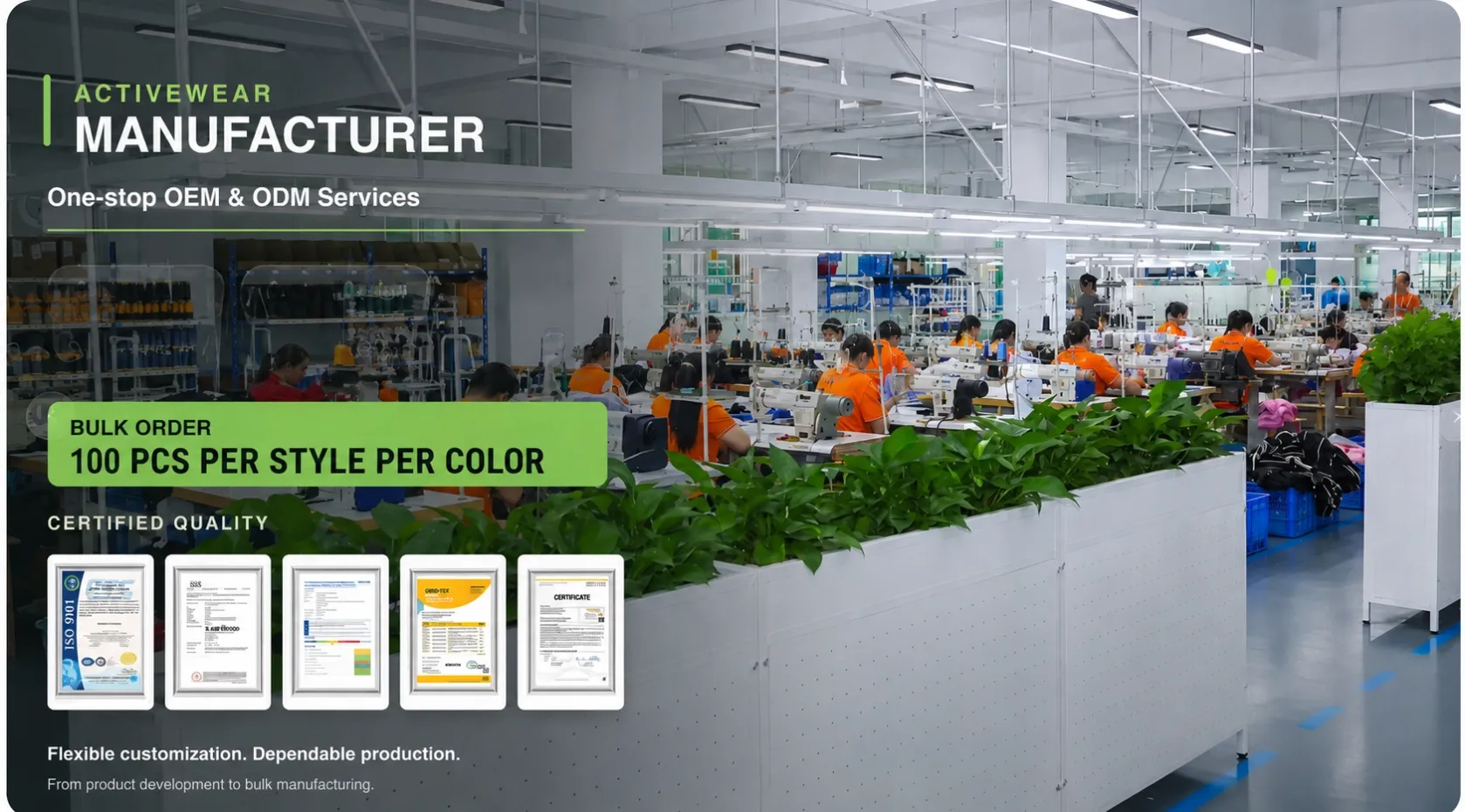
Duorui supports B2B OEM and ODM yoga and gym wear development with MOQ from 100 pieces per style and color. To discuss leggings, sports bras or matching sets, send your requirements through the inquiry page for a tailored fabric and sampling review.