Sep 17, 2026Buying Guides
How to Test a New Activewear Collection with a 100-Piece MOQ
Learn how small activewear brands can test a focused collection with 100 pieces per style and color while managing sampling, sizing, inventory and reorders.
Launching a new activewear collection is exciting, but inventory is usually the first serious risk for a small brand. A large opening order may reduce the unit price, yet it also ties up cash in untested styles, colors and sizes. A focused 100-piece MOQ can give a growing brand enough stock to test real demand without turning the first launch into a warehouse problem.
WHY MOQ MATTERS FOR A NEW ACTIVEWEAR BRAND
Minimum order quantity affects much more than the first invoice. It influences how many styles a brand can test, how widely it can spread its size range and how much cash remains available for marketing, packaging and repeat production. When the first collection is still proving its audience, flexibility can be more valuable than the absolute lowest unit price.
A smaller, focused order gives a brand useful information. Which silhouette attracts the most attention? Which sizes sell first? Does the audience respond better to neutral colors or seasonal shades? Those answers are difficult to predict from mood boards alone. They become clearer after customers begin buying and wearing the products.
WHAT 100 PIECES PER STYLE AND COLOR MEANS
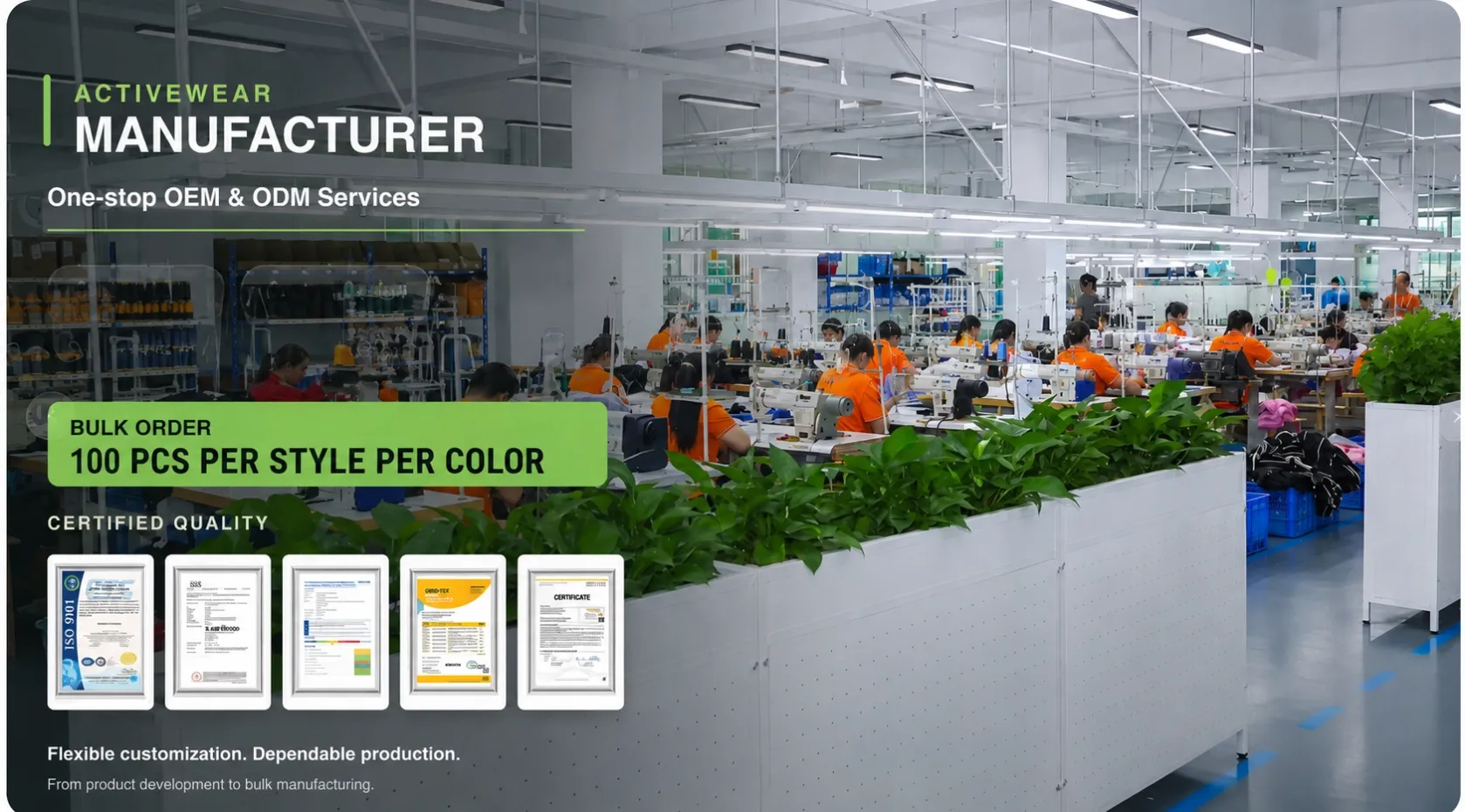
At Duorui, the standard low-MOQ program starts from 100 pieces per style and color. This wording is important. A black sports bra and the same sports bra in blue are two separate color orders. A sports bra and matching leggings are also two separate styles.
For example, a capsule containing one sports bra and one pair of leggings in one color would normally require 100 pieces of each style. Before requesting a quotation, decide which products and colors are truly essential. This prevents a simple two-style plan from quietly turning into a large multi-color order.
BUILD A FOCUSED CAPSULE INSTEAD OF A LARGE CATALOG
A strong first collection does not need dozens of designs. It needs a clear customer, a consistent visual direction and products that work together.
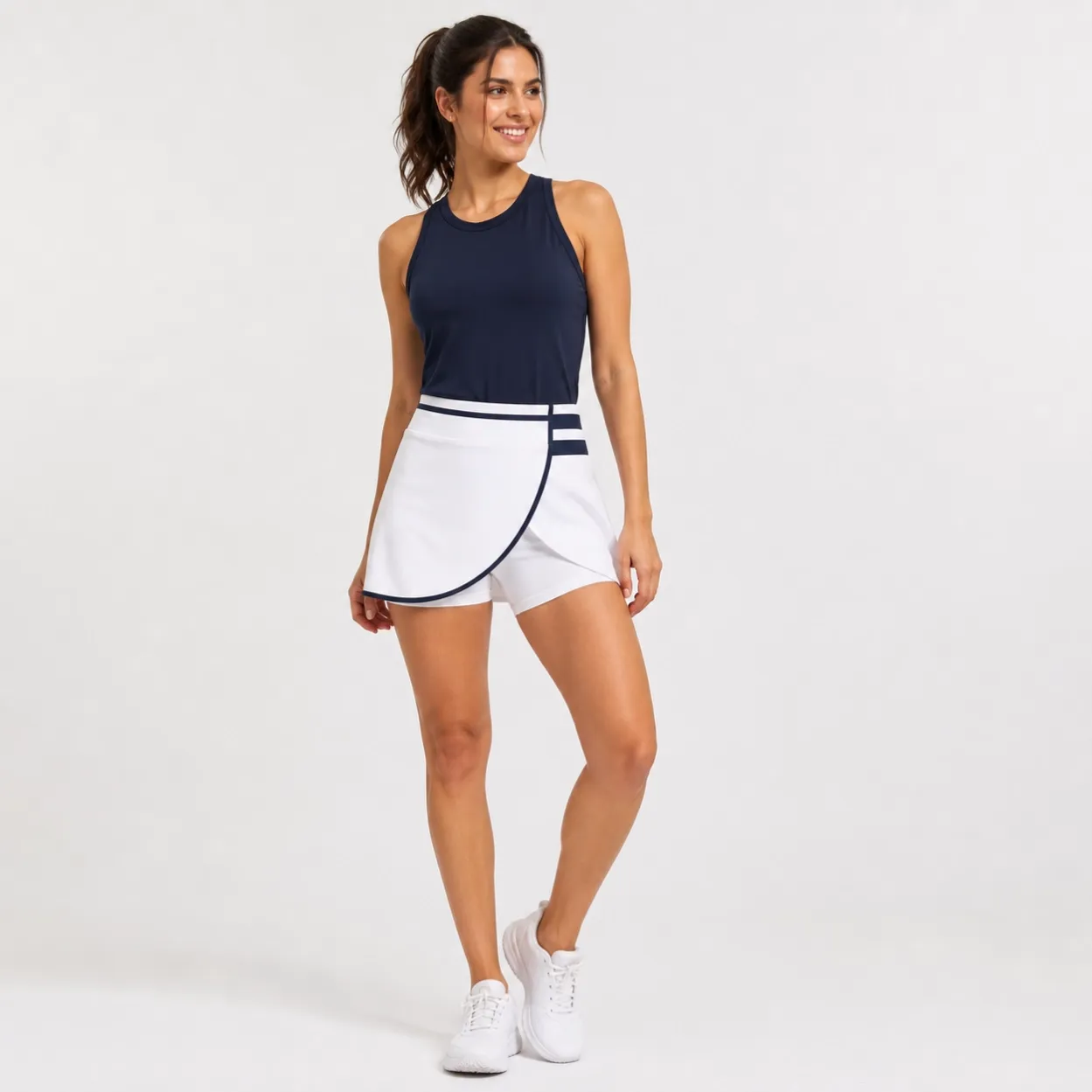
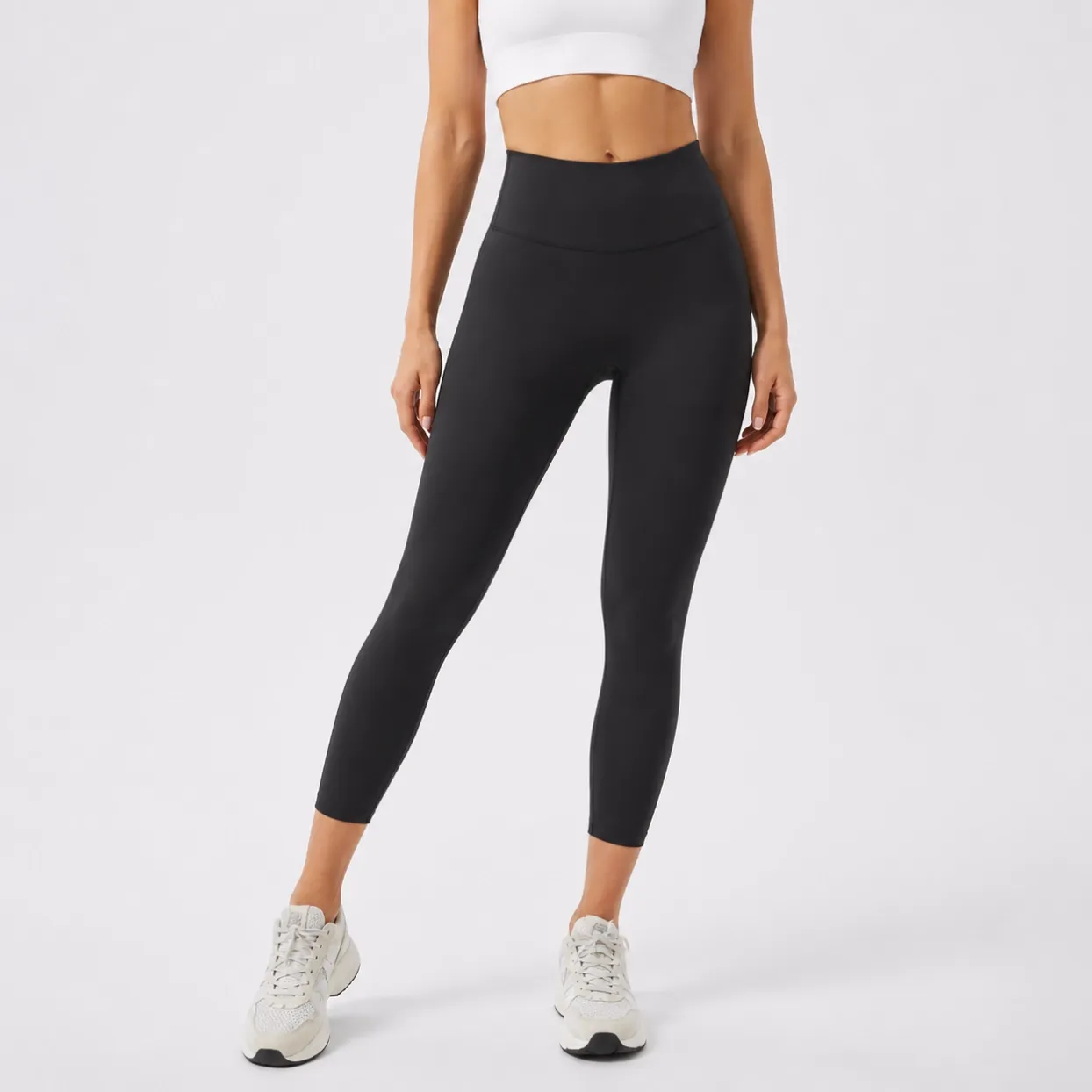
A yoga or gym capsule might begin with a sports bra, leggings and one layering piece. A tennis capsule might begin with a dress, a skort and a fitted top. Keeping the opening range focused makes product development easier and gives customers a clearer reason to buy more than one piece.
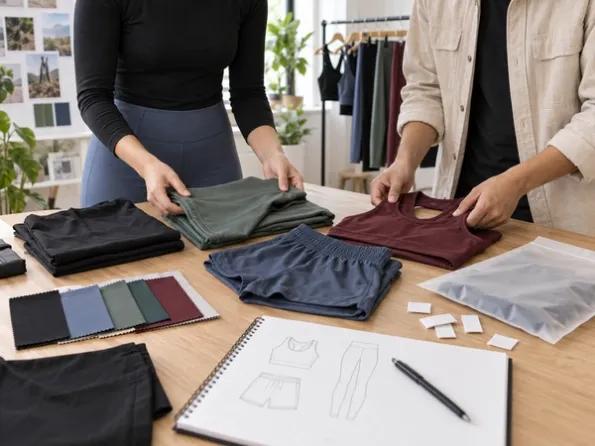
Choose styles that share fabric families, colors or trims where practical. This can simplify sampling and help the final collection feel intentional. It also makes photography, merchandising and brand communication more consistent.
APPROVE THE SAMPLE BEFORE PLANNING BULK PRODUCTION
The sample stage is where a product moves from an idea to a real garment. Buyers can send a design, a tech pack or reference images. The manufacturer then reviews construction, fabric direction, fit details, branding and other customization requirements.
Do not treat the sample as a formality. Check the overall silhouette, garment measurements, stretch and recovery, opacity, seam comfort, pocket placement, support level and logo position. Test the garment in the movements it was designed for. A tennis dress should be checked while serving, bending and moving laterally. Leggings should be evaluated through squats, stretching and repeated wear.
Record every approved change clearly. Bulk production should follow an approved reference rather than a chain of scattered messages.
PLAN SIZE AND COLOR ALLOCATION WITH REALISTIC DEMAND
The total quantity is only one decision. The size breakdown determines whether the right stock is available when customers begin ordering.
Use information from any existing audience, preorder list, studio community or comparable product data. If there is no prior sales history, avoid extreme assumptions. A balanced opening curve is easier to learn from than a size range built around one guess.
The same principle applies to color. One strong core color often gives a new product a cleaner launch than several weak color options. Additional colors can be introduced after the style proves demand.
BALANCE UNIT COST AGAINST INVENTORY RISK
Larger orders can sometimes reduce production cost per piece, but unit price is not the only cost that matters. Unsold inventory uses storage space, restricts cash flow and may eventually require discounting.
The better comparison is total business risk. A smaller first run may carry a different unit cost, but it can protect cash for customer acquisition, content creation and faster replenishment of the styles that perform well. For a new brand, this flexibility can be commercially valuable.
At the same time, a very small and complicated collection can also become inefficient. Too many fabrics, trims and custom details across a small order increase development complexity. Focus the budget on features customers will notice and value.
USE QUALITY CONTROL AS A DECISION SYSTEM
Quality control should begin before bulk production. Confirm the fabric, color, logo method, labels, packaging and measurement standards during development. Make sure the approved sample and written requirements tell the same story.
During bulk production, consistency matters. Finished garments should be checked against the approved standard for measurements, stitching, appearance, branding and packing details. Clear standards reduce avoidable misunderstandings and make repeat orders easier to manage.
PLAN THE REORDER BEFORE THE FIRST LAUNCH
A low-MOQ launch works best when it is connected to a reorder plan. Decide which signals will trigger replenishment. These might include a percentage of stock sold, a waiting list for a particular size or strong repeat interest from retailers.
Track performance by style, color and size. Do not wait until every size is sold out before discussing the next order. Early communication gives both the brand and manufacturer time to confirm materials, changes and production requirements.
The goal is not to stay small forever. The goal is to grow with better information. A focused first order creates evidence, and that evidence supports smarter reorders.
START WITH A CLEAR PRODUCT BRIEF
Before contacting a manufacturer, prepare the product type, target quantity, preferred fabric or performance requirements, color direction, size range, logo method and packaging needs. Include a tech pack when available, but clear reference images and written notes can also help begin the discussion.
Duorui supports B2B OEM and ODM activewear development for small and growing brands, including fabrics, colors, logos, labels and packaging. MOQ starts from 100 pieces per style and color.
To discuss a focused low-MOQ collection, send your design, tech pack or reference images through the inquiry page. We will review the requirements and recommend the next practical development step.