Low MOQ Guides
78% Nylon + 22% Spandex: When It Works, When It Doesn't
78% nylon + 22% spandex at 230gsm is our standard yoga fabric — smooth, stretchy and matte. Here is when it works, when it does not, and how to test it first.
Our standard yoga and training fabric is 78 percent nylon and 22 percent spandex at 230 grams per square metre. It is smooth, soft, matte rather than shiny, and it stretches in four directions, which is why it works well for leggings, sports bras, and tops that have to move with the body. It is not the right fabric for every style, though. It is a stretch knit, not a firm woven fabric, so it will not hold a structured shape, and it is not a natural fibre, so it will not feel like cotton. The only way to know whether it works for your style is to test one sample: stretch it, move in it, wash it once in cold water, and check whether it stays opaque, keeps its shape, and feels right against the skin.
This article is for a new brand that is choosing a fabric for leggings, sports bras, or tops, and wants to decide before paying for a sample. It is not for a brand that has already chosen a different fabric and only wants a bulk price, because the bulk price and the shipping price are both quoted for each order and are not fixed in this article.
What this fabric actually is
Start with the three numbers, because each one tells you something you can feel. The first number is the composition: 78 percent nylon and 22 percent spandex. Nylon is the main fibre, and it gives the fabric its smooth surface and its strength. Spandex is the stretch fibre, and 22 percent is a generous share, which is why this fabric stretches in four directions — across and along the garment — and springs back when you let go. The second number is the weight: 230 grams per square metre, usually written as 230gsm. That number is the weight of one square metre of the fabric, and it is the simplest way to compare one fabric with another. A higher number means a heavier, more substantial fabric, and a lower number means a lighter one. At 230gsm, this fabric sits in the middle: it has enough substance to feel like a real garment rather than a thin layer, and it is not so heavy that it feels stiff or bulky. The third thing is the finish: this fabric is matte rather than shiny, and it has a smooth, soft hand feel, sometimes described as a nude, second-skin feel. It does not shine under gym lights, and it does not look wet when you move in it. Those three facts — the blend, the weight, and the matte finish — are the whole fabric in one sentence, and every decision in this article follows from them.
When it works best
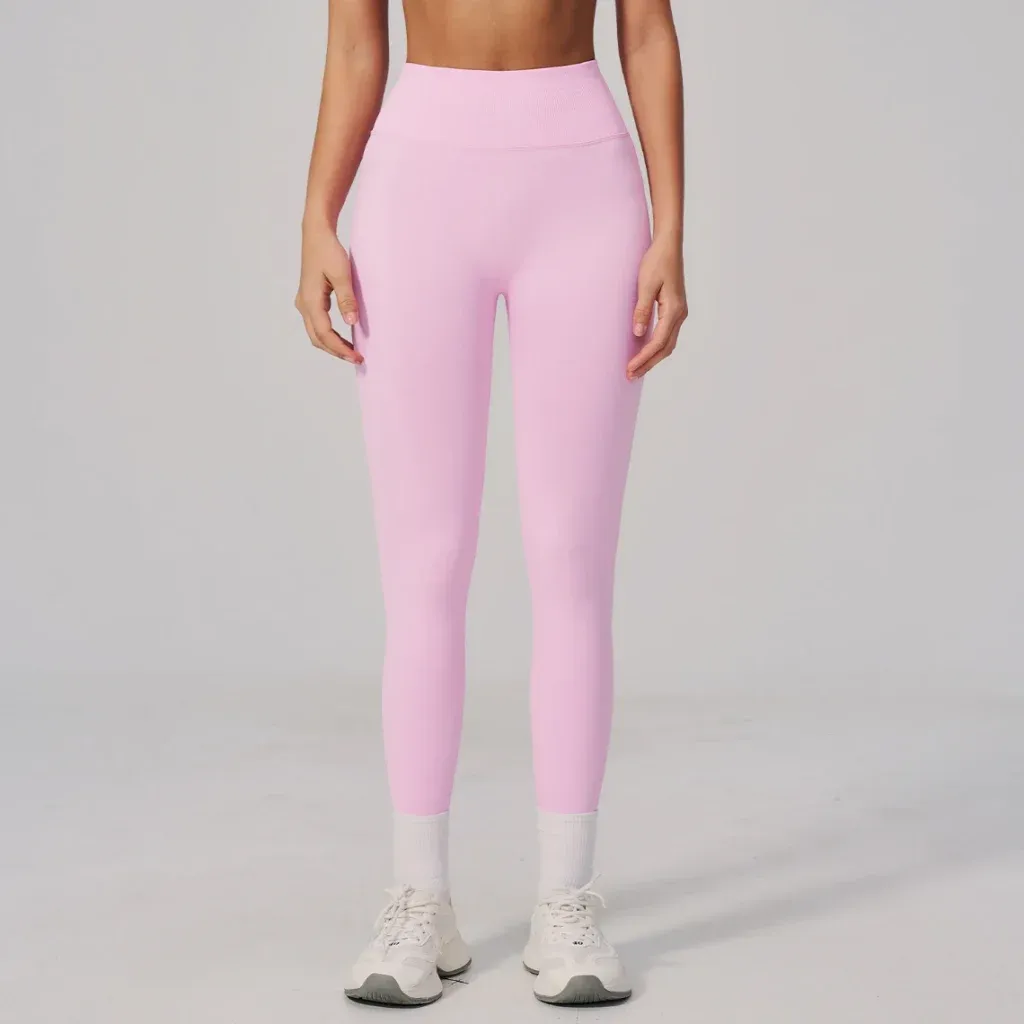
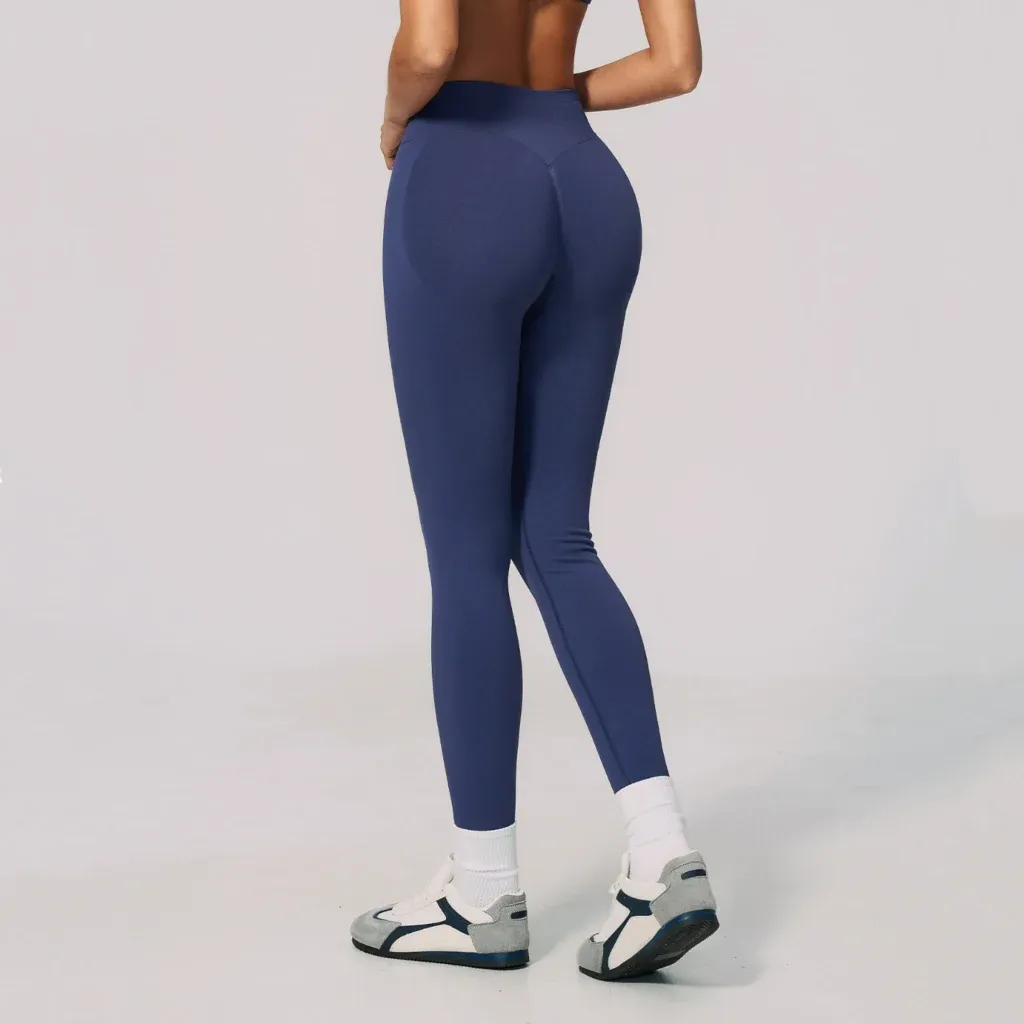
This fabric works best where the garment has to stretch, recover, and stay comfortable against the skin for a long time. Leggings are the clearest case. A legging has to stretch when you bend, squat, and sit, and then return to its shape when you stand up again, and it has to do that again and again without going baggy at the knees. The 22 percent spandex is what makes that possible, and the 230gsm weight is what gives the legging enough coverage that it does not go sheer when it stretches. That is the test that matters most for leggings, and it is the test you must run on your sample: stretch the fabric over your knee or your thigh, look at it in good light, and check that it stays opaque. Sports bras are the second case. A sports bra has to hold without digging in, and it has to stretch enough to put on and take off without a struggle, and a smooth, four-way stretch fabric does both without a stiff band or a scratchy edge. Tops and zip-up jackets are the third case. A fitted training top or a zip-up jacket made from this fabric moves with the shoulders and the back, and the matte finish keeps it looking like training wear rather than swimwear, which is a real distinction for a brand that sells to yoga and Pilates customers. The common thread is movement plus coverage: the garment is close to the body, it moves a lot, and it must not go sheer or lose its shape.
When it does not work
A fabric that is good at one thing is usually bad at the opposite thing, and this blend is no exception, so it helps to name the cases where you should not choose it. First, it does not work when your style needs a firm, structured shape. This is a stretch knit, and a stretch knit follows the body instead of holding a shape of its own. If your design is a structured jacket, a tailored outer layer, or a garment that must stand away from the body and keep its own line, this fabric will collapse into the body instead of holding that line, and no amount of careful cutting will change that. Second, it does not work when your customer wants a natural fibre feel. Nylon and spandex are synthetic fibres, and the fabric feels smooth and cool rather than warm and cotton-like. A customer who buys for the feel of cotton will notice the difference the first time they touch it, so if your brand story is built on natural fibres, this blend will fight that story. Third, it is not the lightest option. At 230gsm it has real substance, and that substance is what gives it coverage, but it also means it is not the airiest layer you can buy. We also work with a lighter blend, 85 percent nylon and 15 percent spandex at 170gsm, which is lighter and more breathable in feel, and the difference between 170gsm and 230gsm is one you can feel in your hand: the lighter fabric drapes more easily and feels cooler, while the heavier fabric feels more substantial and gives more coverage. If your customer wants the lightest possible feel above all else, ask about the lighter option instead of forcing this one to be something it is not. Fourth, it is a hard place for embroidery. Thread does not stretch the way this fabric does, so a large embroidered logo on a very stretchy area can pucker the fabric or feel stiff against the skin. A silicone logo or a print made for stretch fabric fits this fabric better, because the silicone is flexible and moves with the fabric instead of fighting it.
What 230gsm means for fit, coverage, and feel
The weight number deserves its own section, because it is the number buyers misunderstand most. A 230gsm fabric is not a thick winter fabric, and it is not a sheer summer layer. It is a mid-weight performance fabric, and that middle position is exactly why it is our standard for yoga wear. On coverage, the weight works in your favour: a heavier fabric is harder to see through when it stretches, and 230gsm gives a legging enough body that the stretch test described above is a test you can pass, not a test you are set up to fail. That does not mean every colour passes equally, so test your real colour on your sample, and test light colours with extra care, because a light colour shows more than a dark colour when the fabric is stretched. On fit, the weight gives the garment a smooth drape rather than a clingy one. On feel, the weight is part of the soft, substantial hand feel that customers notice when they pick the garment up: it feels like something, not like a thin sheet. The right question is not whether 230gsm is good or bad in general. It is whether your customer wants coverage and substance, or lightness and coolness, more. If coverage comes first, 230gsm is the right call. If lightness comes first, ask about the lighter blend and compare the two samples side by side before you decide.
How to test it on one sample before you order bulk
Do not approve a bulk order on the strength of a fabric swatch alone. A small swatch cannot show you how the fabric behaves when it is cut into your style, sewn into your seams, and worn on a moving body, and the sample is the only place where those behaviours appear before they become a hundred faulty pieces. Order one sample of the style you will sell, in your size and your colour, in this exact fabric: 78 percent nylon and 22 percent spandex at 230gsm. When it arrives, start with the stretch test. Stretch the fabric gently over your thigh or your knee, hold it up to the light, and look for any sign that it goes sheer. A fabric that stays opaque under a gentle stretch is doing its job, and a fabric that goes sheer on the sample will only go more sheer in wear, so do not approve it and hope the bulk will be different. Then move in it. Bend, squat, sit, and reach overhead the way your customer will, and check two things: whether the fabric returns to its shape when you stand up again, and whether it feels smooth and comfortable against the skin after a few minutes of movement. Then check the logo, if your sample has one. A silicone logo should stay bonded and sit flat when you stretch the fabric under it, and a printed logo should stay sharp with no cracking, because the logo and the fabric have to move together. Then wash the sample once, by hand, in cold water, and let it air dry, and check it again after it is dry: the colour, the shape, and the feel should be the same as before the wash. Write down what passed and what failed, with a photograph of each failure, and send that note to the factory in writing, because a factory can only fix what you name.
Your next step: ask for this fabric by name, then prove it with one sample
You do not need to decide the perfect fabric today. You need to decide the most likely one, and then prove it with a single sample. If your style is a legging, a sports bra, a fitted top, or a zip-up jacket, and your customer wants a smooth, soft, matte fabric that stretches in four directions and stays opaque, ask for 78 percent nylon and 22 percent spandex at 230gsm by name, and order one sample in your size and your colour. If your style needs a firm, structured shape, a natural fibre feel, or the lightest possible layer, tell the factory that too, and ask which fabric they would use instead, because the honest answer may be a different blend, and a different blend chosen on purpose is better than this one chosen by habit. A sample costs 50 US dollars per piece, sampling takes 10 to 15 days after your design and logo are confirmed, and bulk production takes 25 to 35 days after you approve the sample. A fully custom order starts at 100 to 150 pieces per style per colour, with sizes mixed inside that quantity, while a ready-stock style with your logo added starts at 20 pieces per style per colour. Payment on the bulk order is a 30 percent deposit by bank transfer or PayPal, and shipping is quoted for each order, because the cost depends on the weight, the quantity, and where the goods are going. To start, send us the style you want to sample, the colour you want it in, and the quantities you want per style per colour. We will confirm the sample cost, the fabric, and the sample date in writing before you pay anything, and we will reply within 1 business day.