Sep 17, 2026Buying Guides
How to Build a Small Private Label Tennis Collection
Plan a focused private label tennis collection with dresses, skorts and tops while managing fabrics, fit, functional details, MOQ and reorders.
A small private label tennis collection does not need a huge number of styles. It needs a clear customer, a consistent point of view and products that solve real on-court needs. For a growing brand, a focused capsule can be easier to develop, photograph, market and reorder than a broad catalog of unrelated pieces.
The most effective starting point is to decide who will wear the collection and where. Competitive club players, social tennis communities, women’s golf customers and studio-to-street shoppers may all like similar silhouettes, but their priorities are different. Product choices should follow the target customer rather than a generic idea of tennis fashion.
DEFINE THE CUSTOMER BEFORE SELECTING STYLES
Begin with the playing environment and intended use. Will the collection focus on performance tennis, tennis lifestyle or a crossover between tennis and golf? Is the customer looking for modest coverage, fashion-led silhouettes or highly practical court details?
A clear customer profile helps the brand decide dress length, skirt shape, neckline, support level, pocket placement and layering options. It also makes marketing more specific. A collection designed for social tennis clubs should not communicate exactly like one built for high-intensity training.
BUILD A CAPSULE AROUND THREE CORE PRODUCT TYPES
A practical opening capsule may include one tennis dress, one skort and one top. These pieces give the collection enough variety while keeping development focused.
The dress can act as the visual hero product. The skort is a flexible separate that can be paired with multiple tops. The fitted top, tank or polo gives customers another way to build an outfit and can support repeat purchases.
Additional colors or layers can be introduced later. For the first launch, it is usually more useful to test a strong product combination than to spread the budget across many similar designs.
DESIGN TENNIS DRESSES AROUND MOVEMENT
A tennis dress must look good while serving, reaching and moving laterally. The garment should be checked in motion rather than approved only from front and back photos.
Important decisions include neckline security, strap position, bust support, waist shaping, skirt volume and overall length. Built-in shorts can improve coverage, while removable pads or an inner bra may be considered depending on the design and target customer.
If the dress includes pockets, test whether a tennis ball can be inserted and removed comfortably without distorting the silhouette. Pocket placement should work for movement and for the final size range.
CHOOSE BETWEEN A TENNIS SKIRT AND A SKORT
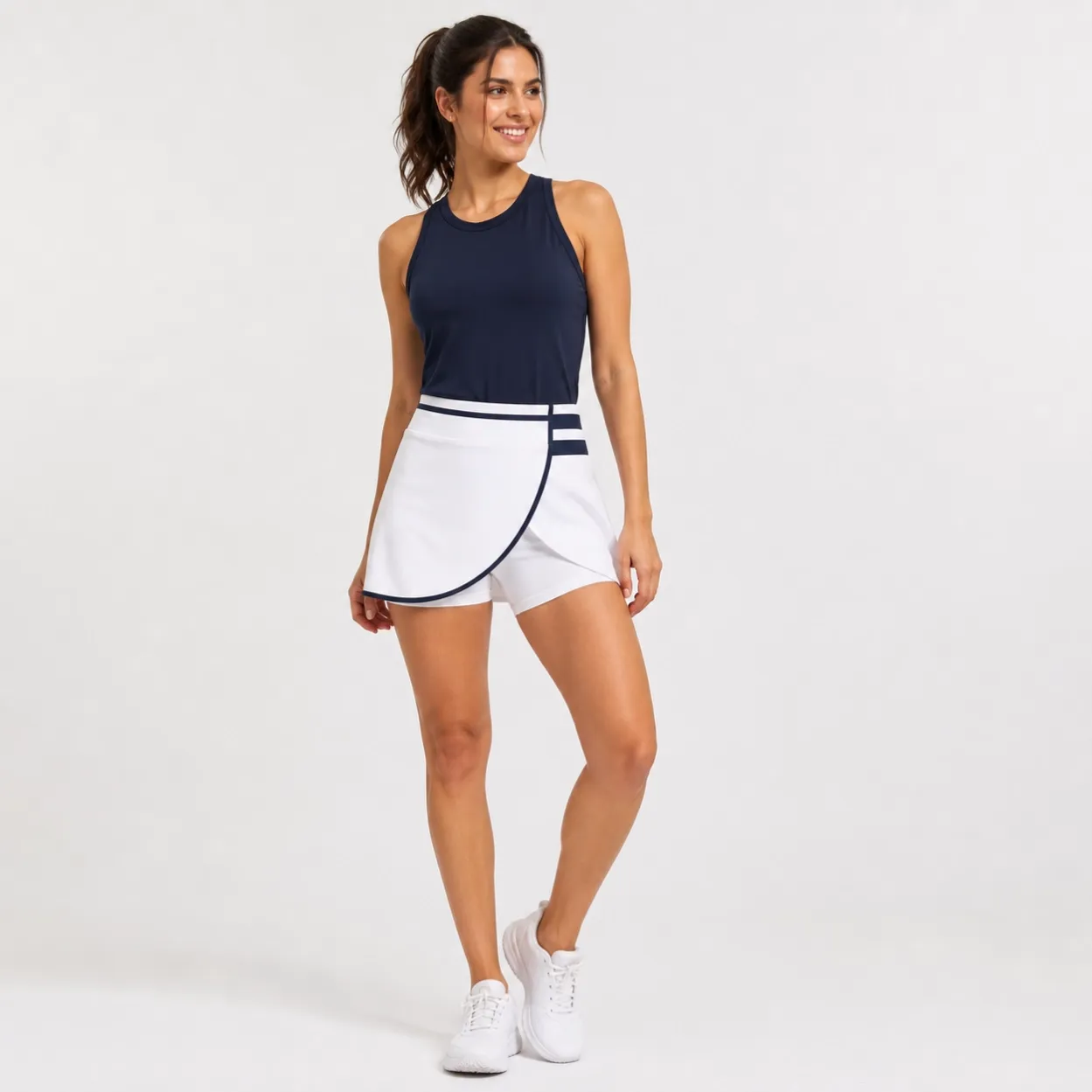
A tennis skirt creates a clean fashion silhouette, while a skort combines the outer skirt with inner shorts. Many private label brands choose skorts because they provide coverage and practical performance in one product.
Pleats, A-line shapes, wrap fronts, flared hems and contrast trims can each create a different brand identity. The waistband also matters. It should stay secure during movement without feeling restrictive or rolling.
Inner shorts should be evaluated for length, stretch, leg opening and pocket placement. The outer skirt and inner layer must move together without twisting or adding unnecessary bulk.
SELECT FABRICS FOR COVERAGE AND RECOVERY
Tennis wear needs fabric that moves freely and returns to shape. Softness is important, but the product must also maintain coverage during serves, bends and quick changes of direction.
Check four-way stretch, recovery, opacity, breathability and surface appearance. Light colors require particular attention because fabric may become more transparent when stretched. If the collection uses white or pastel shades, test the complete garment under different lighting conditions.
A coordinated fabric family can help dresses, skorts and tops share a consistent look and color story. Different weights or constructions may still be needed for inner shorts, bras or structured panels.
MAKE FUNCTIONAL DETAILS PART OF THE BRAND
Pockets, built-in shorts, adjustable straps, removable pads and secure waistbands are not only technical features. They can become part of the product story.
Choose details that match the customer rather than adding features simply to make the specification longer. A pocket should be easy to use. Built-in shorts should stay in place. A contrast trim should remain smooth after stretching. Every detail should earn its place in the garment.
Branding should also fit the product. Small heat-transfer or silicone logos may work well on clean performance pieces, while labels and packaging can carry more of the brand identity. Logo size and placement should be tested on the actual sample.
CREATE ONE CONSISTENT COLOR STORY
A small collection becomes easier to recognize when the colors work together. One core neutral and one controlled accent color may create more impact than several disconnected shades.
Think about how the dress, skort and top will appear together on the website and in social content. Coordinated colors can produce more outfit combinations without increasing the number of styles.
Approve physical color references whenever possible. Screens and digital images can display color differently, so production decisions should not rely only on a color name or online picture.
TEST FIT ACROSS THE COMPLETE SIZE RANGE
The sample size is only the beginning. Tennis products need secure fit during movement, and details such as straps, waistbands, inner shorts and dress length can behave differently across sizes.
Review garment measurements, grading and key fit points before bulk production. Test the sample through serves, lunges, bending and repeated wear. Ask whether the customer can move without adjusting the garment.
The goal is not simply a tight athletic fit. It is a fit that feels secure, functional and appropriate for the intended customer.
USE SAMPLING TO SOLVE PROBLEMS EARLY
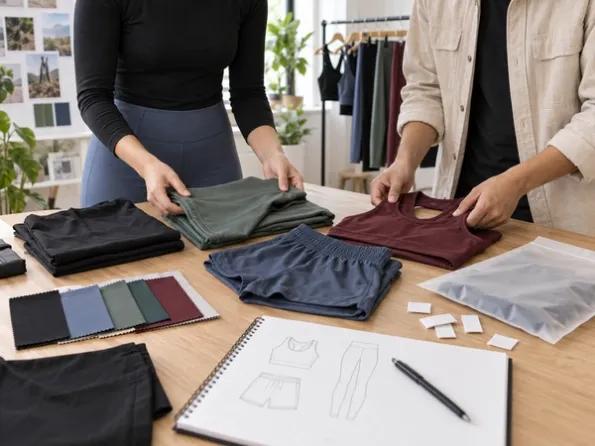
Buyers can begin with a design, tech pack or reference images. During sampling, confirm the silhouette, fabric, color, construction, logo, labels and packaging.
Give consolidated feedback after each review. Mark measurements and construction changes clearly instead of relying on general comments such as make it better or more premium. Specific feedback creates a better production reference.
The approved sample should represent the final decisions for bulk production. This gives both the brand and manufacturer a clearer standard for quality control.
PLAN A LOW-RISK FIRST ORDER AND REORDER PATH
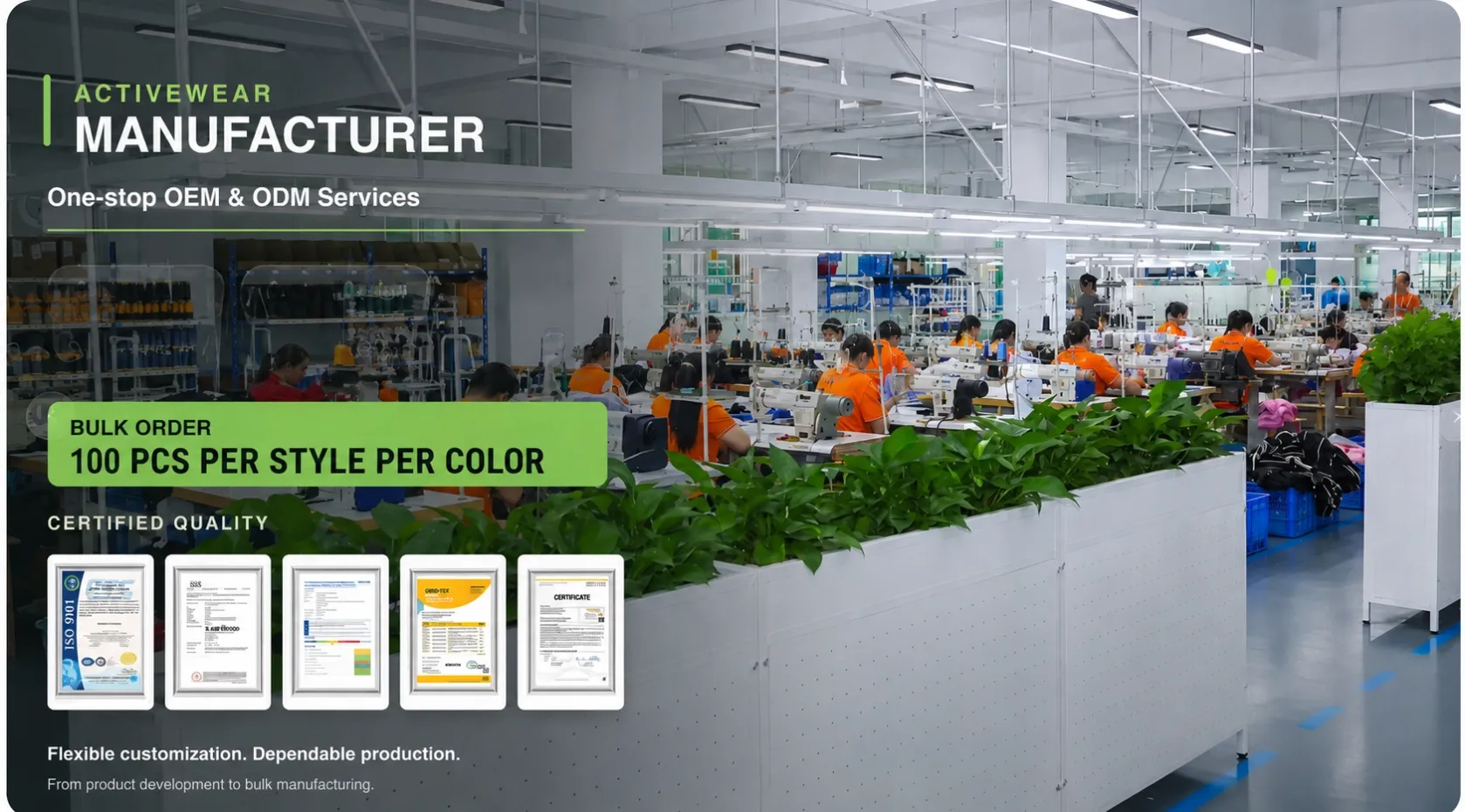
Duorui’s MOQ starts from 100 pieces per style and color. For a small tennis capsule, each dress, skort or top is a separate style, and each color is planned separately.
This makes product selection important. Start with the styles most likely to express the brand and serve the target customer. Track sales by style, color and size after launch, then use real demand to guide reorders and new color additions.
A focused first order is not a lack of ambition. It is a way to learn before committing more cash to inventory.
PREPARE A CLEAR TENNIS DEVELOPMENT BRIEF
Before requesting a quotation, define the product types, quantities, colors, size range, fabric direction, functional details, logo method and packaging needs. Include reference images or a tech pack when available.
Duorui supports B2B OEM and ODM development for private label tennis dresses, skirts, skorts, tops and matching sets. Custom fabrics, colors, logos, labels and packaging are available, with MOQ from 100 pieces per style and color.
Send your tennis collection brief through the inquiry page to begin a practical sampling and production discussion.